
One of the most common questions I hear from families moving to Spain is, “How will we adjust to the later nights?” The Spanish day is famously long: lunch at 2 or 3 PM, dinner after 9, and bedtime routines that stretch well into the evening. For families used to earlier schedules, the shift can feel disorienting—especially when young kids are involved.
As a mom to a toddler who also works in the evenings, I’ve had to find a rhythm that supports both our family life and my professional responsibilities. At first, I felt the pressure to adapt quickly and fully. But I’ve learned that transitioning to life in Spain doesn’t mean starting from scratch. It’s more about finding your own pace—one that blends the best of your old routines with the new culture around you.

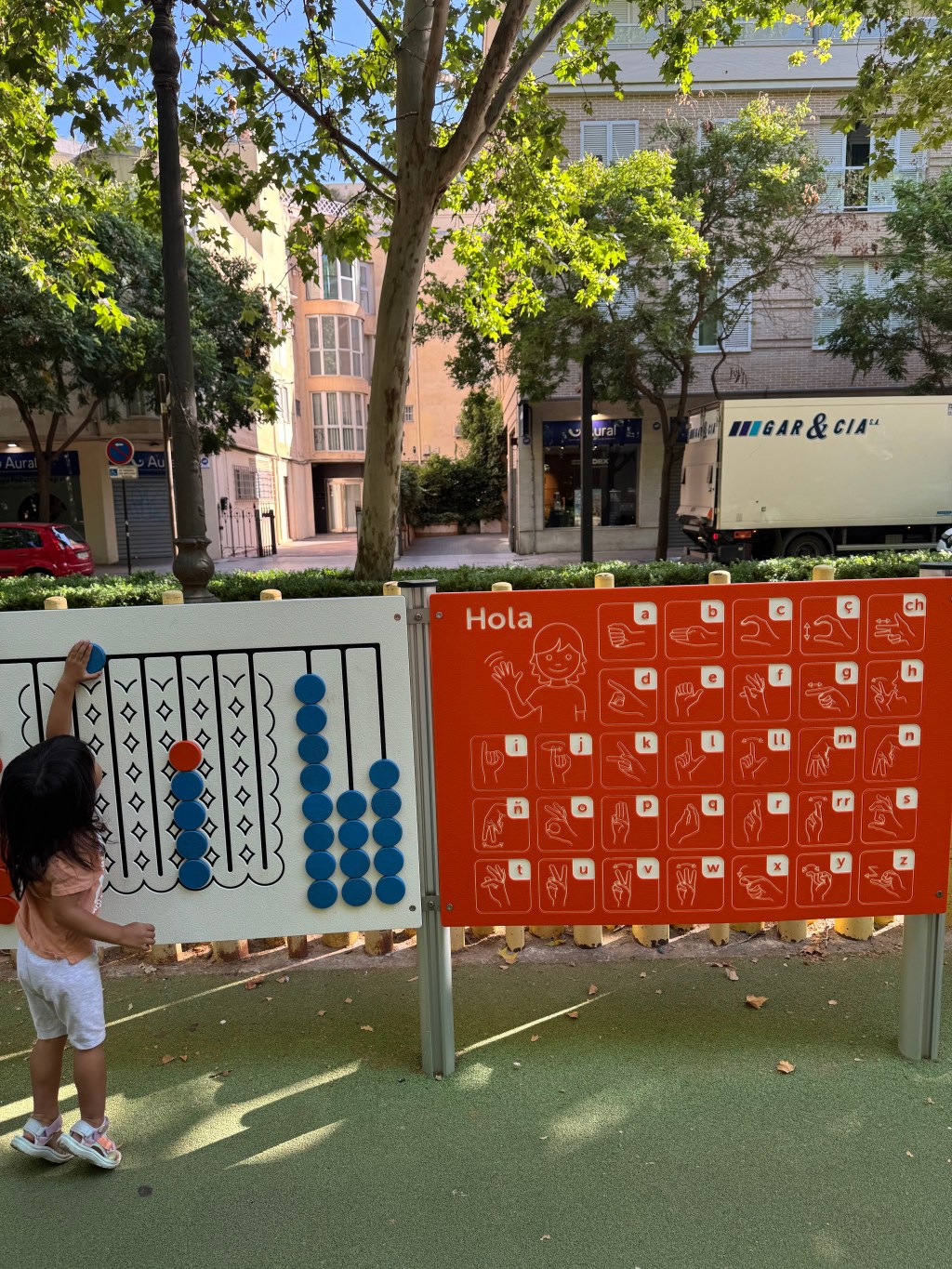
We didn’t switch everything overnight. Instead, I’ve slowly pushed back mealtimes and bedtime in small, manageable increments. On the weekend, we moved lunch from noon to 1, and now often as late as 3 depending on when and if a nap happens. Dinner now hovers around 7:30 or 8 on weeknights for my toddler—later than before, but still on the early side by Spanish standards. On the weekend, she is running around the playground at 9 and eating dinner at 9:30 or later and then asking what our plans are for after. Bedtime on weekends during the summer is typically whenever she crashes.
And that’s the key: flexibility. I keep our core routines during the school week—because consistency helps us all—but I make sure we adapt for summer, weekends, and life in general. Some nights, my daughter’s bedtime stretches later so we can make a spontaneous late-night playground run or attend an event. Other times, we stick to our earlier rhythm to avoid overtiredness or to carve out a quiet evening for myself once work is done.
There are parts of our previous lifestyle I’ve held onto because they still serve us. An earlier wind-down routine before bed. A nap or quiet time that’s (nearly) non-negotiable for everyone’s sake. At the same time, I’ve learned to appreciate what the Spanish schedule offers: the ease of later start in the mornings, the community energy in the evenings, and the sense that the day doesn’t have to end in a rush.
It’s also worth remembering that Spanish families aren’t all following one exact model. You’ll find local parents making adjustments too, opting for earlier dinners, juggling demanding work schedules, or sending toddlers to bed early. Everyone adapts in their own way, even Spaniards.
So, if you’re moving here with children, my advice is this: experiment. Try the Spanish schedule, little by little. Keep what works. Let go of what doesn’t. Be consistent when you need to be, and flexible when life calls for it.
Integration and adapting don’t mean erasing who you were. It means growing into a new version of life—one that makes space for where you come from and what works for you no matter where you.





 Españaula Blog: Your Guide to Schools & Education in Málaga & the Costa del Sol
Leave a comment