
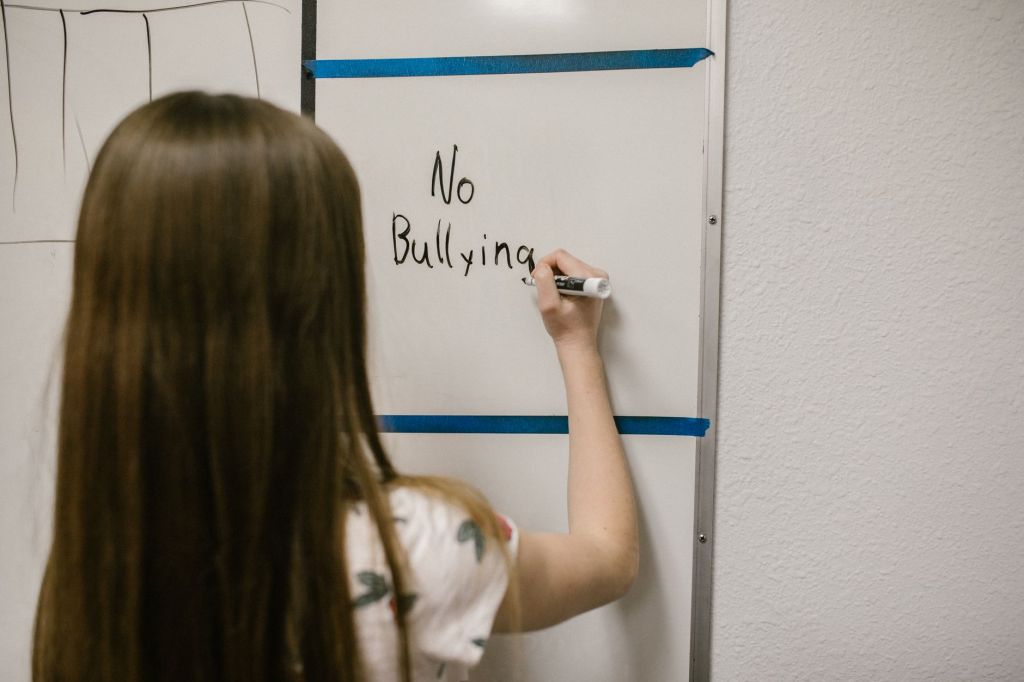
If you suspect your child is being bullied at school, you have more power than you think, even in a unfamiliar system. Every public and concertado school in Andalucía is required to follow the same official anti-bullying protocol, and once you report a concern in writing, the school has to act on it.
This guide walks you through how the process actually works, who does what, what to put in writing, and where to turn if the school doesn’t respond. As a first step, it is always advisable to go first to the teacher and then the director for immediate intervention, and if there isn’t sufficient action, escalating to the protocol described below.
What counts as bullying (acoso escolar)
In Andalucía, bullying is defined as psychological, verbal or physical mistreatment of a student by one or more classmates, repeated over a period of time. The definition comes from the official protocol in the Orden de 20 de junio de 2011, which still governs every publicly funded school in the region. A September 2026 decree toughened the sanctions for aggressors in secondary schools; more on that below.
The protocol is careful to separate bullying from one-off fights or arguments between equals. Those are handled through the school’s ordinary discipline rules. What makes something bullying is a pattern with these features:
- Intention: it is aimed at a specific child, not a random clash.
- Repetition: it keeps happening, so your child starts to expect the next incident.
- Imbalance of power: physical, psychological or social, so your child can’t easily defend themselves.
- A group dynamic: often several aggressors, and classmates who see it but don’t stop it.
It can look like exclusion, insults, humiliation, threats, pushing or hitting, damage to belongings, and cyberbullying through WhatsApp groups or social media. Sexual harassment and attacks based on sexual orientation are also explicitly covered.
You don’t need to prove all of this before you speak up. Reporting a suspicion is enough to set the process in motion and deciding whether it is bullying is the school’s job and can be escalated to a higher authority if warranted.
Who’s who at your child’s school
Knowing the roles saves you weeks of being passed from person to person. These are the people you’ll deal with:
| Role (Spanish) | Who they are | Why they matter to you |
|---|---|---|
| Tutor / tutora | Your child’s homeroom teacher | Usually your first conversation; must pass your report up to the director |
| Equipo directivo (director/a, jefe/a de estudios) | The school’s leadership team | Runs the protocol, decides on urgent measures and discipline |
| Coordinador/a de bienestar y protección | A staff member responsible for student safety and wellbeing | Required in every school since the 2021 child-protection law; a direct contact for bullying |
| Orientador/a | The school counselor or guidance team | Interviews the children involved and designs support for your child |
| Comisión de convivencia | A committee of the school council | Receives the director’s report and tracks the case |
| Inspector/a de educación | Your school’s assigned inspector at your province’s education Delegación | Must be notified when the protocol opens and follows up on the case |
The wellbeing coordinator is the newest role. The national child-protection law (LOPIVI, Ley Orgánica 8/2021) requires one in every school with students under 18, whether public, concertado or private.
Public vs. concertado. If your child is at a concertado, the same protocol applies. The 2011 order states that concertados must follow it, adapted to their own management structure. In practice, that means you may also be dealing with the school’s titular (the owner, often a religious order or cooperative), but the education inspectorate still oversees them. Fully private schools are a different case: they follow their own internal rules, though the LOPIVI obligations still apply.
The official process, step by step
The protocol has 12 steps. Here’s what each one means for you as a parent, in plain language:
- You report it. Anyone who knows or suspects bullying is obliged to tell a teacher, the tutor, the counsellor or the leadership team. Whoever receives it must inform the director.
- The school meets. The leadership team, the tutor and the counselor meet to gather and assess information. This meeting must be recorded in writing. If they think bullying may be happening, they must notify the education inspectorate immediately.
- Urgent protection. Where needed, the school puts measures in place right away to keep your child safe, plus precautionary measures for the aggressor. Think changed seating, supervision at break time, or keeping students apart.
- The families are informed. The tutor or counselor meets with the families of all the children involved to explain the situation and the measures taken.
- Staff are told. The director may confidentially brief your child’s teachers and, if needed, outside services such as social services, health or the courts.
- Information is gathered. The school observes the children, talks to classmates, interviews families and reviews records. The director then writes a formal report.
- Discipline is applied. The director applies corrective or disciplinary measures to the aggressor under the school’s coexistence plan (plan de convivencia).
- The committee is informed. The report and any sanctions go to the school’s comisión de convivencia.
- The report goes to the inspectorate. The full report is sent to the inspection service.
- A tailored plan is designed. The school defines specific actions for your child (support, emotional education, social skills), for the aggressor, for bystanders, for families and for staff. The director must report progress regularly to families and the inspector.
- You’re told what’s being done. Families are informed of the individual measures and any class- or school-wide actions.
- The inspector follows up. The assigned inspector monitors whether the measures are carried out and how the children are doing.
Two things to keep in mind. First, the protocol asks schools to act immediately and avoid unnecessary delays, but it doesn’t set fixed deadlines in days. Second, the school protects the privacy of all the children involved, so you may not be told exactly what sanction the other child received. You are entitled to know what is being done to protect your child.
How to report it so it gets taken seriously
A chat at the school gate is a good start, but it isn’t enough. What moves things forward is a written record.
- Keep a log from day one. Write down dates, what happened, who was involved, any witnesses and how your child reacted. Short, factual notes are more useful than long emotional ones.
- Save evidence. Screenshot messages, WhatsApp groups and social media posts with the date visible. Photograph any injuries or damaged belongings. If your child sees a doctor, ask for a written report (informe médico).
- Put it in writing to the director. Send a dated letter or email addressed to the dirección, copying the tutor and the wellbeing coordinator. Ask explicitly for the activation of the “protocolo de actuación en supuestos de acoso escolar” under the Orden de 20 de junio de 2011. Using that exact phrase signals that you know the process.
- Register it officially. For public schools, you can also file it through the school’s registro (front office) and ask for a stamped copy, or submit it online through the Junta de Andalucía’s electronic register. Either way, keep proof of the date you submitted it.
- Ask clear questions in meetings. Has the protocol been opened? Has the inspectorate been notified? What urgent measures are in place? Who is my contact person? When will we meet again?
- Follow up every meeting by email. A short “Thank you for meeting with me today. As I understood it, we agreed…” creates a record of what was said.
If the school doesn’t act
If the school hasn’t opened the protocol, keeps delaying, or the bullying continues despite the measures, you can go over its head. Escalate in this order:
- Write to the director again, referencing your first letter and its date, and state that you consider the protocol not to have been applied.
- Contact the education inspectorate (Servicio Provincial de Inspección de Educación) at the Junta de Andalucía’s education delegation in your province. Ask for your school’s inspector by name, and submit a written complaint with copies of your previous correspondence. This applies to concertados too.
- Call a helpline for guidance. The Ministry of Education’s anti-bullying line, 900 018 018, is free, runs 24/7 and is staffed by psychologists; it covers cyberbullying too. Fundación ANAR’s child and teen helpline (900 20 20 10) is another option, and children can call it themselves.
- Go to the police or prosecutor if there’s violence, threats, sexual harassment or serious cyberbullying. You can file a complaint (denuncia) with the Policía Nacional or Guardia Civil. Cases involving aggressors aged 14 to 17 go to the Fiscalía de Menores. Children under 14 can’t be prosecuted, but a complaint still creates an official record and can trigger involvement from child protection services.
If the inspectorate doesn’t respond either, you can file a complaint with the Defensoría de la Infancia y la Adolescencia de Andalucía, the region’s children’s ombudsman (formerly known as the Defensor del Menor), which regularly handles bullying complaints against schools.
In serious cases, moving your child to another school is also an option. Ask the inspectorate about a mid-year transfer; it shouldn’t be the first step, but it’s good to know it’s on the table.
New since September 2026: the aggressor moves, not the victim. Under Decreto 483/2026, in force since 31 August 2026, once bullying is confirmed at a secondary school (instituto), the standard sanction for the student responsible is a transfer to another school. It isn’t automatic: the school must first open a disciplinary file, hear the students involved and their families, and allow time for objections, as reported by The Objective. The change targets public institutos, so if your child is in primary or at a concertado, ask the school how it applies to them.
Supporting your child at home
The process at school matters, but what your child needs most is to feel believed and safe with you.
- Listen first. Let them tell it in their own words, without rushing to fix it or questioning whether it “really” happened.
- Tell them it’s not their fault, and that telling you was the right thing to do.
- Keep them in the loop, at a level that fits their age, so they know adults are acting.
- Don’t contact the other child or their family directly. It almost always escalates things and can complicate the school’s process.
- Watch for changes: trouble sleeping, stomach aches before school, falling grades, withdrawing from friends. If you’re worried, your pediatrician at the centro de salud can refer your child for psychological support.
A note for international families. Bullying can be harder to spot when your child is still learning Spanish or adjusting to a new culture. Children sometimes hide it because they don’t want to worry parents who are already stressed by the move. Language is never a reason to stay silent: you can ask the school to communicate in writing so you can translate at your own pace, and you’re welcome to bring a Spanish-speaking friend or advisor to meetings.
The system in Andalucía gives you real tools: a mandatory protocol, a named contact for student wellbeing, and an inspectorate that has to follow up. Report in writing, keep records, and know who to call next if the school stalls.
This article is general information, not legal advice. If your case involves violence or a criminal complaint, consider speaking with a lawyer.
Sources
- Protocolo de actuación en supuestos de acoso escolar, Orden de 20 de junio de 2011 (Anexo I)
- Orden de 20 de junio de 2011, disposición sobre centros concertados (BOJA 132)
- Decreto 483/2026, de 31 de agosto (BOJA)
- The Objective: Andalucía endurece la respuesta contra el acoso escolar (8 Sept 2026)
- AEPD: obligation to appoint a coordinador de bienestar y protección (LOPIVI art. 35)
- Fundación ANAR: school bullying helpline 900 018 018



Leave a comment